Distribution-ready product data
One catalog for products, stock, packaging, and returnables
What does this LuniOps workflow do?
Keep sales, warehouse, delivery, and invoicing aligned on the same identifiers, units, prices, availability, food data, and deposit rules. A wholesale catalog carries the operational details needed after the product name — without turning daily work into spreadsheet maintenance. Each downstream team sees the product information relevant to its work.
Updated Published by OzyCore GmbH
Describe the sellable unit
Product numbers, SKU, barcode, base unit, package conversions, weight, volume, pallet quantity, price, and tax context stay together.
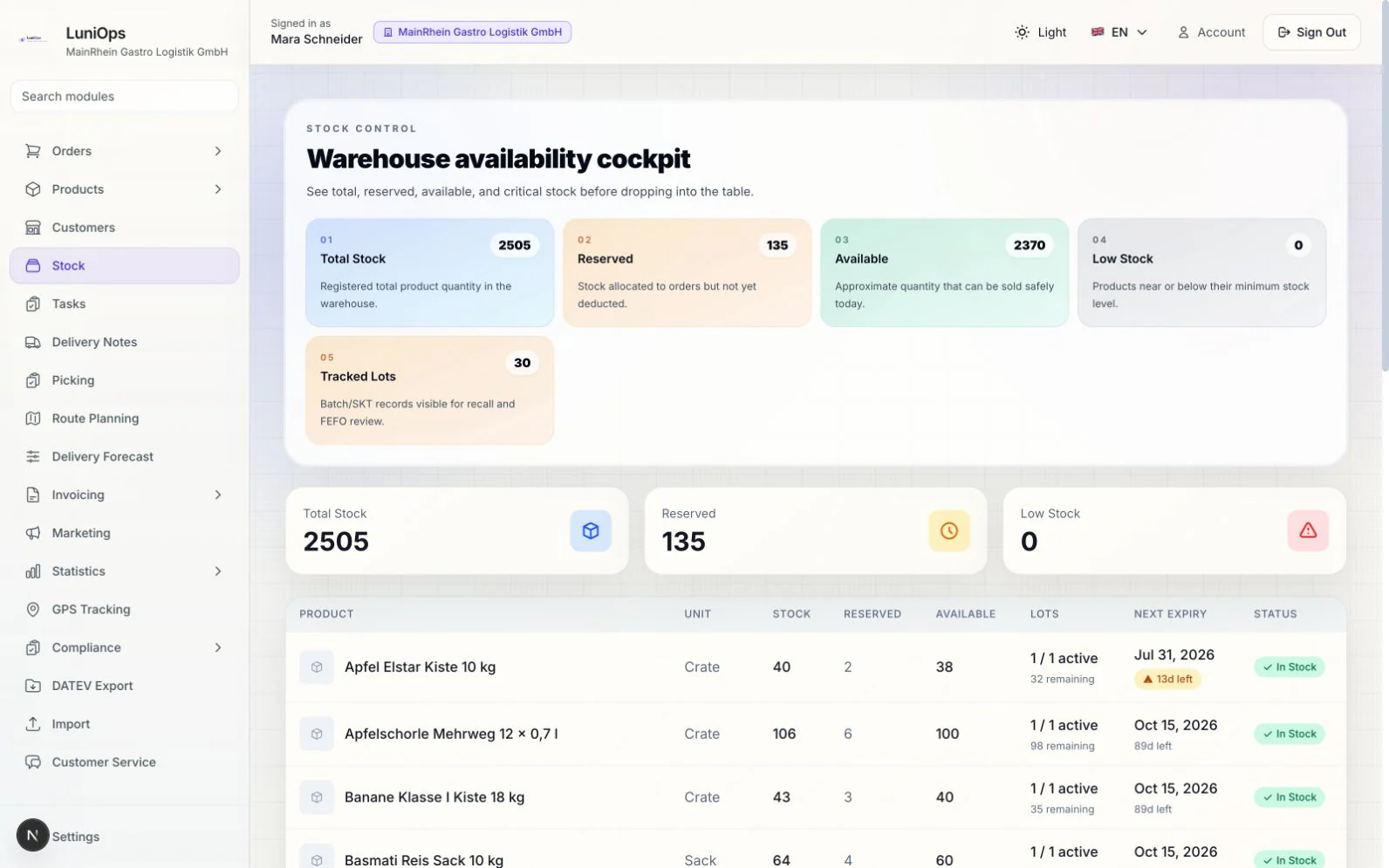
Control availability
On-hand and reserved stock, minimum levels, stock movements, lots, expiry dates, and FEFO-oriented work support reliable order promises.
Handle food and beverages
Temperature class, catch weight, expiry decision, cases, crates, bottles, kegs, pallets, and deposit mappings support mixed assortments.
Operational benefits of a complete catalog
Each downstream team sees the product information relevant to its work.
Fewer unit errors
Sales unit, package hierarchy, and conversion quantities remain explicit.
Clearer availability
Stock and reservations provide a shared basis for sales and warehouse decisions.
Better food traceability
Lots, expiry context, temperature class, and recall-related records can stay connected to the product flow.
Returnables stay visible
Delivered and returned reusable units can update customer balances instead of living in paper notes.
Typical product-to-delivery flow
- 1Create or import the product with identifiers, units, price, tax, and distribution data.
- 2Receive or adjust stock and add lot or expiry context where required.
- 3Reserve the product for approved orders and use its packaging data during picking and loading.
- 4Record delivered quantities and reusable returns so stock and customer balances remain traceable.
Can one catalog cover produce and beverages?
Yes. Product type, units, temperature, catch-weight, packaging, and deposit decisions can be configured per product.
Is available stock stored separately?
LuniOps derives sellable availability from on-hand and reserved quantities so teams work from a consistent view.
Are tax and deposit rules automatic legal advice?
No. The system keeps explicit, reviewable values; production tax and accounting mappings must be approved for the business.
Related feature pages
Review this workflow live
See how this LuniOps capability fits your orders, deliveries, customers, and invoicing workflow.
Request a demo